Does Incognito Mode Actually Get You Cheaper Flights?
Consumer Reports tested the incognito-mode flight myth directly back in 2016, running 372 side-by-side searches on nine booking sites, and cookies only made a difference on 42 of them. Readers ask TravelScanner.AI some version of "should I search in incognito?" almost every week, so instead of repeating the folklore, we went back to the primary data. The short answer is simple. Opening a private window does not get you a cheaper fare, and in the rare cases where the price actually differed, the cookie-free browser was slightly more often the pricier one, not the cheaper one.
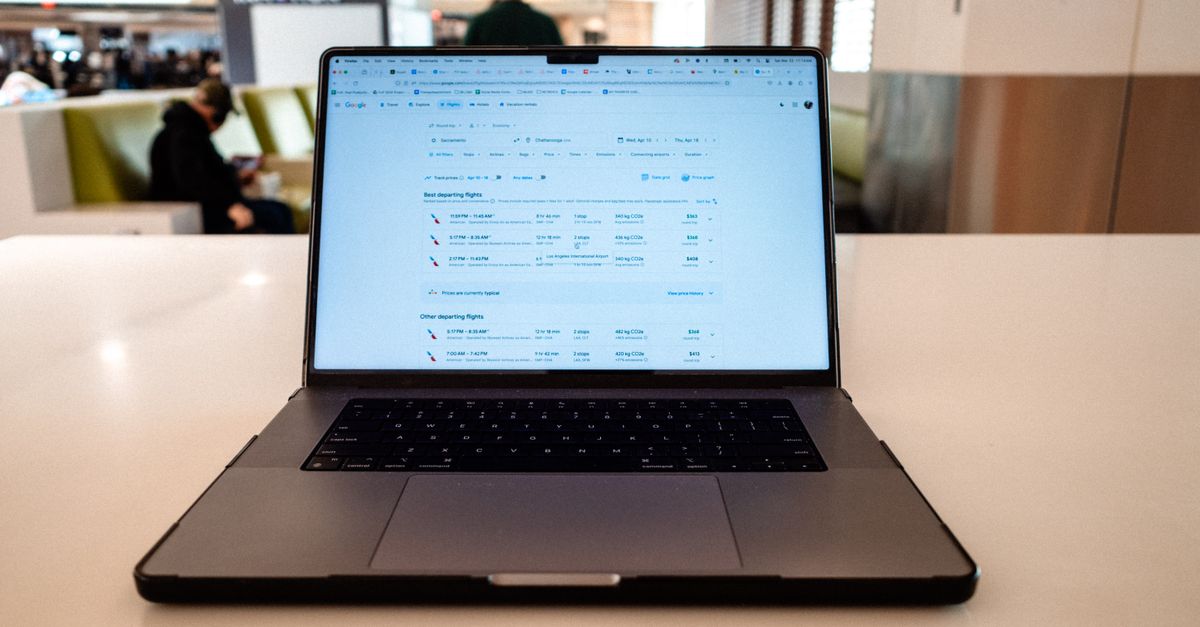
What Consumer Reports Actually Found When It Tested the Myth
The 2016 test is still the only controlled, publicly documented experiment most articles on this topic cite, and it's worth reading exactly what it found rather than the retelling. Testers ran four sets of simultaneous searches across five domestic routes and nine booking sites, pairing one browser with a full search history against a "scrubbed" browser cleared of cookies, the closest real-world proxy for incognito mode. Out of 372 total searches, prices matched on 330 of them, or roughly 89 percent. Among the 42 pairs that did differ, the scrubbed, cookie-free browser showed a higher fare 25 times and a lower fare 17 times.
That direction matters. A lot of the articles that cite this same 2016 study report it as "incognito found cheaper flights about 7% of the time, more expensive about 5% of the time," the reverse of what the primary numbers actually show. Run the math yourself. 25 of 372 is about 6.7 percent, and 17 of 372 is about 4.6 percent. The cookie-free browser was pricier roughly 7 percent of the time and cheaper roughly 5 percent of the time, not the other way around. The most surprising line in Consumer Reports' own data isn't "no difference." It's that when there was a difference, going incognito came out fractionally worse, not better, than just using a normal browser.
For context on how TravelScanner.AI approaches this, we're a direct-booking platform for flights and hotels, not a price-comparison tool, so our interest here is genuinely just getting readers accurate information before they waste ten minutes clearing cookies for nothing. You can check live flight pricing directly on TravelScanner.ai without any of the private-browsing theater.
Why Flight Prices Really Move Between Searches
If it's not your cookies, what is it? Airlines price each flight in tiers that move with real supply and demand. As the cheaper seats on a flight sell, the fare steps up to the next tier, and that shift tracks how many people have actually booked, not how many times any one person has searched. Seat inventory, time to departure, competitor pricing, and demand spikes are the actual levers.
Scott Keyes, CEO of the flight-deal service Going, put it directly to Gizmodo: "I have come to terms with the fact this myth will still be widely believed the day I die." Keyes has searched for cheap flights professionally since 2013, which is one of the reasons his skepticism carries weight. Academic research points the same direction. As Gizmodo reported, economists from Berkeley, Yale, and the University of Chicago studied the pricing algorithm of a large US airline and found that overall bookings on a flight move the price, but an individual traveler's own search interest does not. Yale economist Kevin Williams summarized it this way: "Your search behavior almost surely does not affect anything... But if you booked the last seat at the lowest price, then you could affect that flight for everyone else."
The New Wrinkle: "Surveillance Pricing" Isn't the Same Myth
Here's where the story gets more complicated, and where a lot of coverage blurs two genuinely separate issues together. The classic incognito myth is about ordinary dynamic pricing, fare buckets and inventory, described above. A newer and legally distinct question is whether airlines or their vendors use AI to set an individualized price for you specifically, based on personal data. Those are different mechanisms, and conflating them overstates what either one actually does.
In January 2025, the Federal Trade Commission released initial findings from a study showing that a person's precise location or browser history can frequently be used to target individual consumers with different prices for the same goods and services. It's worth being precise about scope here. That FTC study examined third-party pricing-technology vendors (Mastercard, Accenture, PROS, Bloomreach, Revionics, and McKinsey & Co.), not airlines directly.
Airlines got pulled into the same conversation a few months later. In July 2025, Senators Ruben Gallego, Richard Blumenthal, and Mark Warner sent Delta Air Lines a letter warning that its planned AI pricing tool "not only present[s] data privacy concerns, but will also likely mean fare price increases up to each individual consumer's personal 'pain point'." Delta's Chief External Affairs Officer Peter Carter responded on the record: "There is no fare product Delta has ever used, is testing or plans to use that targets customers with individualized prices based on personal data." Delta also says customers never have to sign in to shop or compare prices, and that its fares are publicly filed through the ATPCO system multiple times a day.
Then, in April 2026, according to a legal alert from the law firm Mayer Brown, a JetBlue social media account replied to a customer whose fare had jumped $230 while booking a funeral trip by telling them to "clear[] your cache and cookies or book[] with an incognito window." JetBlue deleted the post, but the exchange became the centerpiece of a federal class-action lawsuit, Phillips v. JetBlue Airways Corp., filed April 22, 2026, alleging JetBlue uses tracking technology to set prices based on individual behavior. JetBlue told MarketWatch the post was an "error" and that its fares "are not determined by cached data or other personal information." The lawsuit is an active, unresolved allegation, not a proven finding, worth watching, but not evidence that clearing your own cookies will help you personally.
Incognito Mode vs. What Actually Moves Airfare
| Factor | Does it move the price? | What incognito mode does about it |
|---|---|---|
| Browser cookies / search history | No measurable effect per controlled testing | Clears them, but there was nothing to clear |
| Fare buckets / seat inventory | Yes. Fares rise as the actual seats sell | Nothing. Inventory sells out regardless of browser |
| Time to departure | Yes. Most airlines raise prices as seats sell out and dates approach | Nothing |
| Point of sale / your location | Yes. The same flight can price differently by country or region | Nothing. Incognito doesn't mask location, only cookies |
| Vendor-side "surveillance pricing" (still emerging, disputed) | Unclear or unresolved, subject of ongoing FTC study and litigation | Unclear. This is a data-sharing question, not strictly a cookie question |
Does a VPN Do What Incognito Can't?
This is where people mix up two different tools. Incognito mode blocks cookies and local browsing history. It does not hide your IP address or location. A VPN changes your apparent location, which is what actually triggers "point of sale" pricing differences. As Dollar Flight Club explains, airlines often adjust fares based on the point of sale, so the same flight can cost more or less depending on where the booking appears to originate. If you're chasing a location-based price gap, a VPN is the relevant tool. Incognito mode by itself isn't built to do that job.
What Actually Saves You Money
None of this means there's nothing you can do. It just means the effective moves aren't about hiding your browser history.
- Search more than once, on more than one browser. Consumer Reports' own advice from its test still holds. Search multiple times over multiple days, with and without cookies cleared, simply because prices genuinely fluctuate and a wider sample catches more of that fluctuation.
- Set a price alert instead of refreshing manually. Tools like Kayak's alerts will email you when a tracked fare drops, which does the repeated-checking work for you.
- Remember the 24-hour rule. By law, once you buy a ticket you can cancel without penalty for 24 hours, as long as you're not flying within a week, so if you find a lower fare shortly after booking, you have a real window to fix it.
- Check pricing where it's actually live and direct. TravelScanner.AI shows live, direct-booking pricing for flights and hotels rather than theatrical browser tricks, which is a more productive use of the two minutes you'd otherwise spend opening a private window.
Frequently Asked Questions
Does incognito mode lower flight prices?
No. Consumer Reports' 2016 controlled test found identical prices in about 89 percent of 372 side-by-side searches. Where prices did differ, the cookie-free browser was pricier slightly more often than it was cheaper.
Do airlines use cookies to track me and raise fares?
There's no controlled evidence that they do. Fare movement traces to fare-bucket inventory, demand, and time to departure, not individual browsing history, per Consumer Reports, Dollar Flight Club, and Gizmodo.
Does a VPN help find cheaper flights?
A VPN can expose location-based "point of sale" price differences by changing your apparent country or region, a different mechanism from incognito mode, which only clears cookies and local history, as Dollar Flight Club explains.
Is "surveillance pricing" the same thing as the incognito myth?
No. The incognito myth is about ordinary dynamic and fare-bucket pricing. "Surveillance pricing" refers to a separate, newer, and legally disputed question about whether AI systems set individualized prices using personal data, the subject of an ongoing FTC study and active litigation, not something incognito mode addresses.
What actually causes flight prices to jump between searches?
Seat inventory in a given fare bucket selling out, rising demand, and shrinking time to departure are the documented drivers, not repeated searching, per Consumer Reports and Gizmodo.
TravelScanner.AI is a direct-booking travel platform for flights and hotels. We may earn a commission when readers complete hotel or flight bookings through partner integrations on our site. This does not change the price you pay or the rankings shown in this article. Article research and structuring used AI tools; final editing and publication are reviewed by a human editor before going live.
Sources
- Consumer Reports, "How to Get the Lowest Airfares" (Aug. 25, 2016): https://www.consumerreports.org/airline-travel/how-to-get-the-lowest-airfares/
- Federal Trade Commission, "FTC Surveillance Pricing Study Indicates Wide Range of Personal Data Used to Set Individualized Consumer Prices" (Jan. 17, 2025): https://www.ftc.gov/news-events/news/press-releases/2025/01/ftc-surveillance-pricing-study-indicates-wide-range-personal-data-used-set-individualized-consumer
- Senator Ruben Gallego, official Senate press release (Aug. 1, 2025): https://www.gallego.senate.gov/news/press-releases/icymi-gallego-colleagues-demand-answers-from-delta-ceo-as-company-moves-toward-ai-pricing-model-to-set-airfares/
- Delta News Hub, "Delta responds to misinformation around AI pricing" (Aug. 7, 2025): https://news.delta.com/delta-responds-misinformation-around-ai-pricing
- Mayer Brown LLP, "New Class Action Targets 'Surveillance Pricing'" (May 11, 2026): https://www.mayerbrown.com/en/insights/publications/2026/05/new-class-action-targets-surveillance-pricing-what-businesses-using-personalized-pricing-need-to-know
- Dollar Flight Club, "Why Flight Prices Change Every Time You Search" (Apr. 14, 2026): https://dollarflightclub.com/articles/why-flight-prices-change-every-time-you-search/
- Gizmodo, "Why So Many People Think They Can Get Cheaper Flights Using Incognito Mode" (Mar. 25, 2024): https://gizmodo.com/incognito-mode-does-not-help-you-find-cheap-flights-1851360398

Comments
Post a Comment